



Three Ways the 2024 Tiguan Outclasses the 2024 RAV4
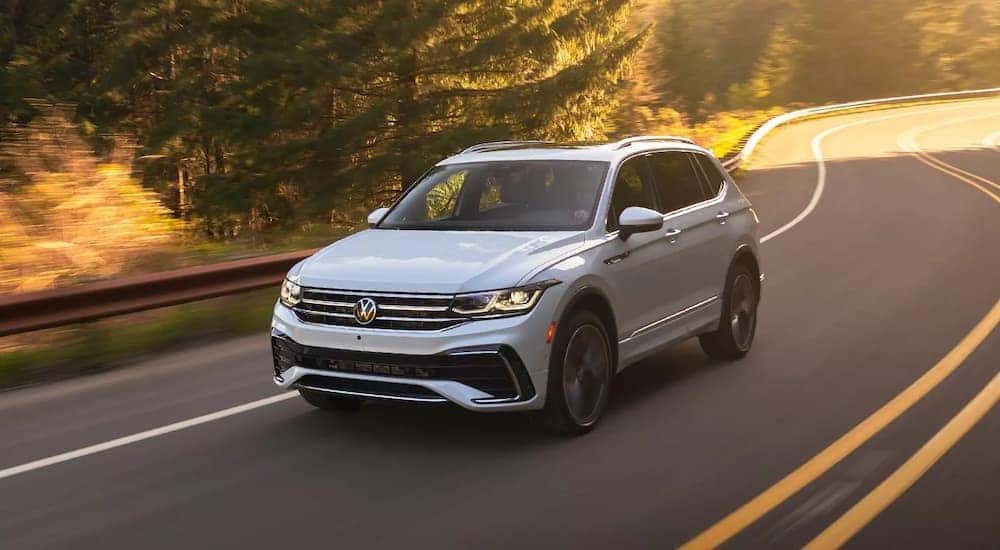
Toyota’s RAV4 gets a lot of attention, as it offers a lot of great features at a great value. It can be challenging to lure compact SUV shoppers away from Toyota’s popular marquee, but that doesn’t mean that there aren’t ways for other compact SUVs to one-up the RAV4 in key areas. In fact, the Volkswagen Tiguan has some compelling features that make it stand out from the competition and, in particular, stand out from the RAV4.
Are these features distinctive enough to make you visit a Volkswagen dealer near SeaTac? We hope to persuade SeaTac drivers that choosing the 2024 Tiguan over the 2024 RAV4 is beneficial due to the differences between them—so what are they, and how do they make the Tiguan more enticing than the RAV4? Well, let’s go over three ways the 2024 Volkswagen Tiguan surpasses the 2024 Toyota RAV4…
#1. The Tiguan Has Three Rows of Seating
Seating is one of the most integral features of an SUV, offering great opportunities for storage, comfort, and passenger compatibility. Both the 2024 Toyota RAV4 and the 2024 Volkswagen Tiguan are compact crossover SUVs, yet they are distinct in terms of cargo and passenger volume. Regarding the latter in particular, the Tiguan manages to provide a lot more space than the RAV4—and it’s not even much of a comparison because the Tiguan has something that the RAV4 doesn’t have: a third row.
Despite the popularity of the RAV4 over the years, it does not offer third-row seating anymore. That’s right: it used to offer a third row during the third generation between the 2005 and 2012 model years. This option made it possible to seat two additional people in the very back in addition to the five people it supported across the two front rows.
This was made possible as the RAV4 during the third generation was configured in a short or long wheelbase, with the long format being available in select regions, including North America. However, subsequent generations removed the third-row option, and now it’s back to supporting only five people across two rows.
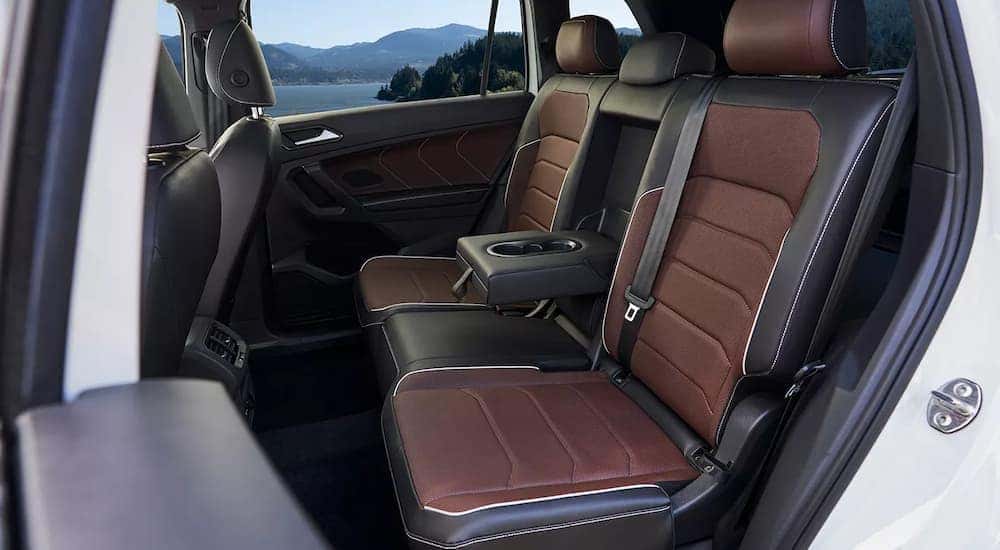
However, for SeaTac drivers who find themselves constantly having to drive the family around or potentially using their vehicle for ride-sharing purposes to make extra cash, the 2024 Volkswagen Tiguan does offer a third-row seating option; you can either have the compact SUV configured as a two- or three-row SUV. This gives you space to support up to seven people across all three rows, with two captain chairs, a split bench in the middle row, and two people supported in the third row.
For those of you looking for a compact SUV that still offers you a lot of passenger capacity when it comes to seating, the Tiguan easily manages to outdo the RAV4. This makes it quite the viable option for families, ride-share drivers, or those looking for a great commuter vehicle for carpooling, especially given that a lot of people do plenty of driving from the Seattle Tacoma International Airport to surrounding cities.
#2. The Tiguan Has Greater Cargo Capacity
Storage is just as important as passenger capacity, because being able to seat a lot of people is quite enticing, but being able to store a lot of items is also equally as important. Storage capacity determines what you can carry, where you can carry it, and how much of it you can bring. That’s one of the things that helps benefit SeaTac drivers looking for a spacious and cargo-compliant compact SUV.
The RAV4 has some good capacity for its size. While Toyota opted to remove the three-row configuration, its cargo capacity did not actually increase. The RAV4 still manages a very respectable amount of cargo capacity; you have the storage compartment behind the second row, offering up to a total of 37.6 cu.ft. of cargo capacity for your items.
If you fold down the second row, you can make use of additional cargo capacity—up to 69.8 cu.ft. of space. Now, if you opt for the RAV4 Prime, the cargo capacity is slightly less than what you get from the standard RAV4, as it offers 33.5 cu.ft. of cargo capacity behind the second row and 69.8 cu.ft. of cargo capacity with the second row folded down.
The 2024 Tiguan is also available in multiple formats thanks to being available in different seating configurations. These formats offer different levels of cargo capacity—all of which are great. In the three-row configuration, you have up to 12 cu.ft. of cargo capacity in the rear, 33 cu.ft. of cargo capacity behind the second row with the third row folded, and up to 65.3 cu.ft. with the second and third rows folded down.
While the third-row configuration offers slightly less total cargo volume than the RAV4, you are still getting access to additional seating capacity compared to the RAV4. However, with the two-row Tiguan, you have up to 37.6 cu.ft. of space behind the second row—the same as the RAV4 behind the second row—but if you fold down the second row, you have up to 73.4 cu.ft. of cargo capacity.
Now, the significance of this is that if you opt for the three-row Tiguan, you have a vehicle that gives you near equivalent cargo capacity as the RAV4 but with added passenger capacity. With the two-row Tiguan, you have more cargo capacity than the RAV4. Whether you’re taking kids to school, picking up friends, or frequently traveling to and from the airport, having that extra bit of cargo capacity in the Tiguan is the difference between what you can store and what you have to leave behind.
#3. IQ.Drive’s Semi-Automated Capabilities
Safety is an essential feature of a vehicle, but one that people often overlook when purchasing. So long as it has driver assistance features and sensors for dynamic stability control and traction management, most people don’t get too worried about all of the other safety features.
Obviously, airbags and canopies are important—especially for families—but these days, safety has evolved far beyond the basics, and it’s more involved than just aids and assists; there are also automated systems that take a lot of the work out of driving as well. In the case of the 2024 Tiguan versus the 2024 RAV4, the safety systems are quite similar at the outset, but there are some that give the Tiguan a clear leg up.
The 2024 RAV4 employs Toyota Safety Sense 2.5, which features all of the standard safety aids you could ask for. You have the Pre-Collision System with Pedestrian Detection, Front and Rear Parking Assist with Automatic Braking, and Blind Spot Monitor with Rear Cross-Traffic Alert. Other features that the RAV4 includes are Automatic High Beams, Dynamic Radar Cruise Control, and Lane Departure Alert with Steering Assist. However, what the RAV4 doesn’t have is semi-automated driving mechanisms like the 2024 Volkswagen Tiguan.
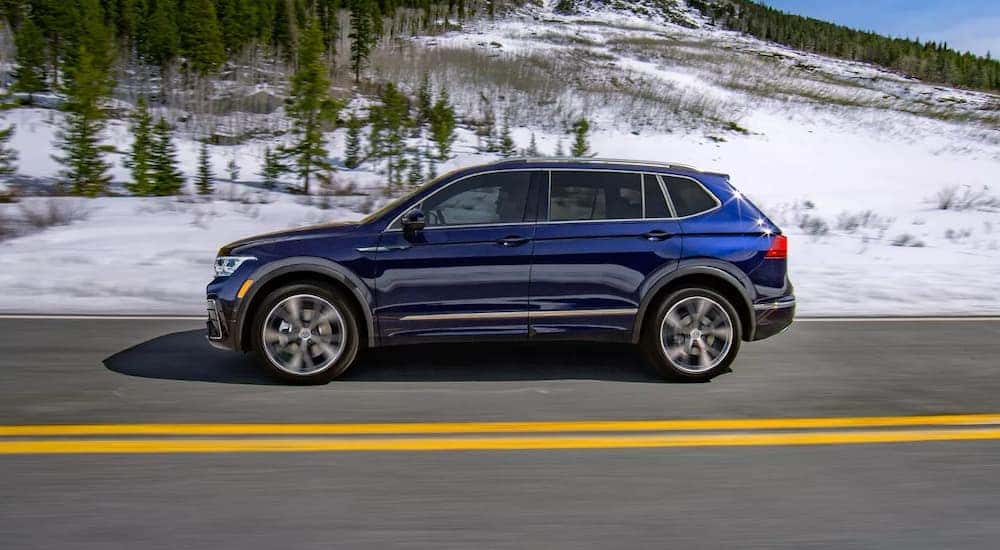
The 2024 Tiguan comes with IQ.Drive, which makes it easier to navigate SeaTac than ever before. You have comparable features to the RAV4, such as Active Blind Spot Monitor, Adaptive Cruise Control, Rear Traffic Alert, and Lane Assist, but you also have other added technologies to automate and streamline the driving experience, like Travel Assist and Emergency Assist. These automated driving systems reduce the need to stress over the driving situations you typically encounter, whether you’re on the interstate or in the city.
The 2024 Tiguan not only offers plenty of warnings, alerts, and assists, but it also makes it so that you have a semi-automated driving experience when all of these systems are working together. So if you have to do a lot of frequent commuting and traveling during rush hour traffic, the Tiguan can reduce the stress by doing a lot of the heavy lifting for you, making sure you have the smoothest and safest ride possible to your destination.
0 comment(s) so far on Three Ways the 2024 Tiguan Outclasses the 2024 RAV4