Open Today Sales: 9 AM-8 PMOpen Today Service: 7:30 AM-6 PM


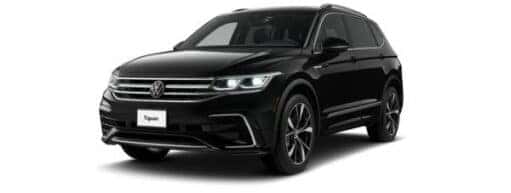
Starting at
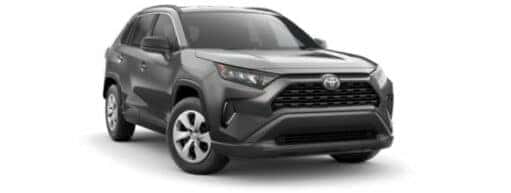
Starting at
| 221 | Torque (lb-ft) | 184 |
| 73.5 | Max Cargo (cu.ft.) | 69.8 |
| 7 | Max Occupancy (seats) | 5 |
Choosing the right vehicle is not always easy; you have so many different options available to you that it can be difficult to narrow them down and know you are getting the perfect fit. This is particularly true with something like a small or compact crossover SUV, where the market is considerably crowded, and there is often very little to distinguish one model from another. Looking at the 2023 Volkswagen Tiguan vs 2023 Toyota RAV4, you might feel they are very similar and that there is not much to make one stand out over the other, but a closer look reveals that the Tiguan has much more to offer.
For example, at a glance, you might look inside these two compact crossovers and see they both have two rows of seating for up to five passengers. But another look at the VW model reveals that a two-row configuration is only one option; you can also choose a three-row version of the Tiguan with seating for up to seven people. That is not something Toyota offers with the RAV4, giving you an unmatched choice from Volkswagen designed to provide you with enough room for everyone you need to bring along with you. Not only that but, just looking at the two-row versions of both models, the VW Tiguan provides you with almost four cu.ft. more total interior cargo space than the RAV4.
Beyond the substantial differences in the configuration of these two vehicles' interiors, the Tiguan also has a lot more to offer in terms of technology and comfort features. For example, although both of these vehicles start with cloth seating, the highest trim for the RAV4 has SofTex-trimmed seating—a synthetic leather a little too close to plastic for our comfort—while the Tiguan has genuine leather seating surfaces available. Similarly, the standard digital speedometer with a 7.0-inch display for the RAV4 is just fine, but it falls short of the Tiguan's standard Volkswagen Digital Cockpit system and 8.0-inch instrument display. Combine all of this with great safety features from the available IQ.DRIVE system from Volkswagen, and it becomes clear that the Tiguan takes the cake.

We sometimes hear people complain that every vehicle in a certain class is too similar to the others and that it's difficult to tell them apart without looking at the manufacturer's logo. To be honest, we understand this criticism because there are a lot of copycat models out there—but as soon as you take a good look at the Volkswagen Tiguan, it becomes clear just how different this SUV is from everything else. One of the clearest ways that the Tiguan sets itself apart from other models like the Toyota RAV4 is with the options you have for the interior layout and just how large it is compared to similar vehicles.
The biggest distinction, as far as we are concerned, is that you have two options for how the interior of the VW Tiguan is configured compared to pretty much every other compact crossover and the one setup they offer. When you are shopping for a vehicle, you deserve to get something with all of the features that you want, which includes an interior that perfectly meets your needs. The Toyota RAV4 has one setup available: a two-row interior with seating for up to five passengers. To be fair, the Tiguan also has this as an option, but if you want more people to come along with you, there is a three-row version of the Tiguan available with seating for up to seven passengers, which is perfect if you have a growing family and you need space for the kids to pile in and spread out.
Not only does the Tiguan give you amazing options for interior setup and passenger seating, but it also provides you with more space inside for cargo than the RAV4. Inside the RAV4, Toyota has provided just over 37 cu.ft. of cargo space behind the rear seats and less than 70 cu.ft. of total cargo volume. This is a bit more space inside than the rear of the three-row Tiguan (65.7 cu.ft.), which makes sense since those extra seats take up some room. With a two-row VW Tiguan, however, you get identical rear cargo space but more than 73 cu.ft. of total cargo volume behind the front seats. This tells us that Volkswagen has made better use of the space behind the front row, providing you with more cargo volume for when you need to load up and hit the road.
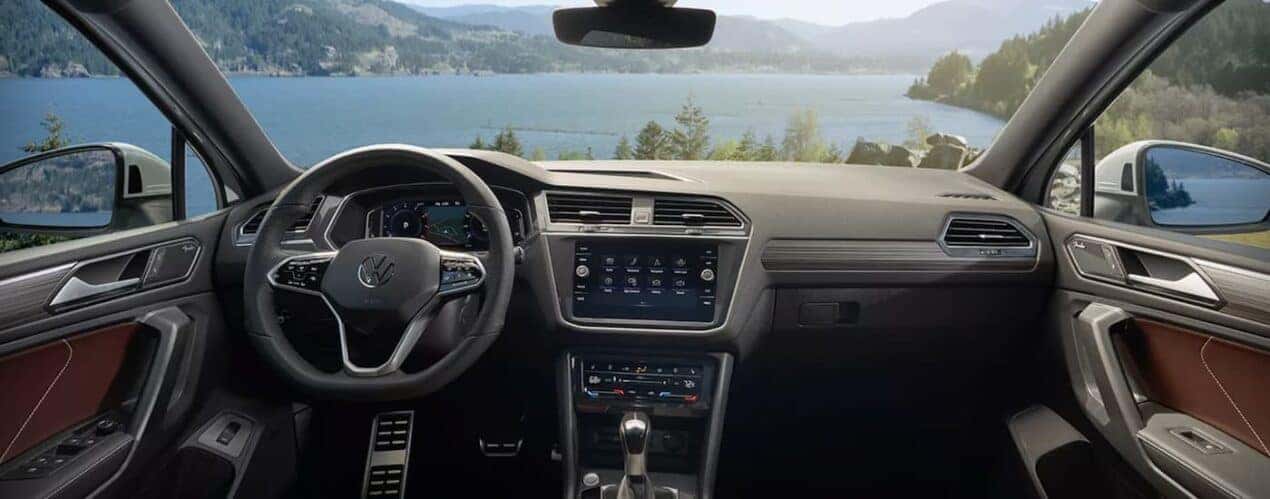
Any time you consider a couple of vehicles while deciding which one will best meet your needs, it is a good idea to look at the kinds of features found inside. Without fail, the main things people say matter most in enjoying their vehicle are the comfort and tech features found inside since these directly affect your overall driving experience. The Toyota RAV4 has plenty to offer, especially at higher trims, but it falls behind what Volkswagen delivers in some key ways.
For example, the starting trim for the RAV4 comes with a 7.0-inch Multi-Information Display for the driver, along with an 8.0-inch infotainment display and a six-speaker sound system. There are larger displays available at higher trims, along with a JBL Premium sound system, but this gives you a sense of what the RAV4 starts with. The starting trim comes with a six-way adjustable front driver's seat, a four-way adjustable front-passenger seat, and fabric-trimmed seating. Higher trims, like the Limited, feature an eight-way power-adjustable driver's seat, but the front-passenger seat is still only four-way adjustable, and the SofTex-trimmed seating lacks the quality of real leather.
With the Volkswagen Tiguan, on the other hand, you find a standard Volkswagen Digital Cockpit system with an 8.0-inch digital instrument display in the starting trim. The available Volkswagen Digital Cockpit Pro system upgrades that to a 10.25-inch fully-configurable display for a superior driving experience, while the available 8.0-inch infotainment system with Navigation elevates things even further. Cloth seating is standard, with six-way manually-adjustable front seats in the starting trim. The highest trim, however, gives you eight-way power-adjustable front seats with lumbar support, featuring heated and ventilated front seats with leather seating surfaces that we much prefer over synthetic options like Toyota's SofTex.

If you're interested in a crossover as a means of getting around town and fulfilling your daily routine, you'll need a vehicle that will keep you safe, especially when the roads get too wild or monotonous. Both the Toyota RAV4 and the Volkswagen Tiguan come with impressive standard safety technology, with more available to take your driving experience even further. For example, the RAV4 has the Toyota Safety Sense system with a Pre-Collision System, Lane Departure Alert, and Road Sign Assist. Additional safety features like Front and Rear Parking Assist with Automatic Braking or an Anti-theft system with an alarm and Downhill Assist Control are available but not standard on the starting trim. These are impressive, but Volkswagen simply delivers more.
Standard safety features on the VW Tiguan include a Blind Spot Monitor to help warn you when someone is hiding where you might not be able to see them, along with Pedestrian Monitoring, which is designed to warn you if someone steps out in front of your vehicle. To really get the most from what the Tiguan offers, there is the available IQ.DRIVE safety package that includes impressive technology like a Travel Assist system with Adaptive Cruise Control and Front Assist that features a Forward Collision Warning and Autonomous Emergency Braking. You also get a Rear Traffic Alert with this package and Lane Assist to help you stay in your lane while on the road. There is no denying that the RAV4 has a lot to offer in terms of safety, but it just cannot keep up with everything the Tiguan can deliver.
If you're interested in a crossover as a means of getting around town and fulfilling your daily routine, you'll need a vehicle that will keep you safe, especially when the roads get too wild or monotonous. Both the Toyota RAV4 and the Volkswagen Tiguan come with impressive standard safety technology, with more available to take your driving experience even further. For example, the RAV4 has the Toyota Safety Sense system with a Pre-Collision System, Lane Departure Alert, and Road Sign Assist. Additional safety features like Front and Rear Parking Assist with Automatic Braking or an Anti-theft system with an alarm and Downhill Assist Control are available but not standard on the starting trim. These are impressive, but Volkswagen simply delivers more.
Standard safety features on the VW Tiguan include a Blind Spot Monitor to help warn you when someone is hiding where you might not be able to see them, along with Pedestrian Monitoring, which is designed to warn you if someone steps out in front of your vehicle. To really get the most from what the Tiguan offers, there is the available IQ.DRIVE safety package that includes impressive technology like a Travel Assist system with Adaptive Cruise Control and Front Assist that features a Forward Collision Warning and Autonomous Emergency Braking. You also get a Rear Traffic Alert with this package and Lane Assist to help you stay in your lane while on the road. There is no denying that the RAV4 has a lot to offer in terms of safety, but it just cannot keep up with everything the Tiguan can deliver.

There is no denying that the Toyota RAV4 is a fine compact crossover, but it just cannot keep up with everything that Volkswagen has brought to the road with the incredible Tiguan. Whether you are looking for a third row of seating, greater interior cargo space, or the remarkable new VW Digital Cockpit Pro system available for the Tiguan, you simply cannot find these things with Toyota's offering. These are only a few of the reasons we are so incredibly proud to be able to offer the Tiguan and the rest of the outstanding Volkswagen lineup. No matter what you are looking for in your next car or SUV, Volkswagen has you covered, and we are here to help you find the perfect vehicle.
At Bud Clary Auburn Volkswagen, we are committed to providing you with the highest level of customer service available anywhere. We focus on the needs of our customers, which means we will listen to you, answer your questions, and work alongside you to help you find the right vehicle with everything you have been looking for. Whether you have already figured out all the features and options you want in your next ride or still have more questions than answers, we are ready to help. Call or visit us at Bud Clary Auburn Volkswagen today to learn more, and let us show you how easy it can be to find a ride with all of the features you've been dreaming of.
*Images, fuel economy, and other stats, may reflect higher trim levels, options, or features that may result in a higher cost from the starting MSRP.
MSRP excludes tax, license, registration, additional options, and possible destination charges. Dealers set own prices.

