Open Today Sales: 9 AM-7 PMOpen Today Service: 8 AM-4 PM



Starting at
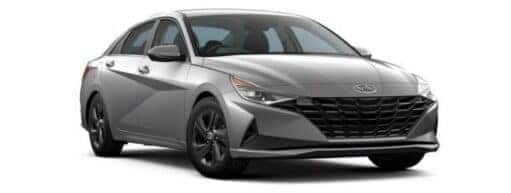
Starting at
| 158 | Standard Horsepower (hp) | 147 |
| Std. | Digital Instrument Cluster | Avl. |
| 12-Channel BeatsAudio | Sound System | 8-Speaker Bose |
Folks looking for an excellent commuter car often focus on two things: price and fuel economy. If this sounds like you, then you are probably thinking about comparing two of the top compact sedans available today, the 2022 Volkswagen Jetta vs 2022 Hyundai Elantra. Each of these models represents the most recent version of models that have developed reputations for affordability and fuel efficiency. As a result, they are ideal cars for commuters to consider. What's more, each includes exceptional arrays of driver assistance and connectivity technology. This is because Volkswagen and Hyundai have constantly worked on updating and upgrading their respective vehicles.
Both the Volkswagen Jetta and Hyundai Elantra are in the seventh generation of their models. However, the Jetta has a longer legacy, dating all the way back to 1980, while the Elantra debuted a decade later in 1990. In addition, the seventh-generation Elantra is fairly new, having been introduced in 2020. In comparison, the seventh-generation Jetta has been on the road since 2018, although the 2022 model includes a number of improvements over the previous year's model, while the 2022 Elantra has remained largely the same from last year. The 2022 Jetta features a new engine, standard digital gauges on all models, and even a new trim, the Jetta Sport.
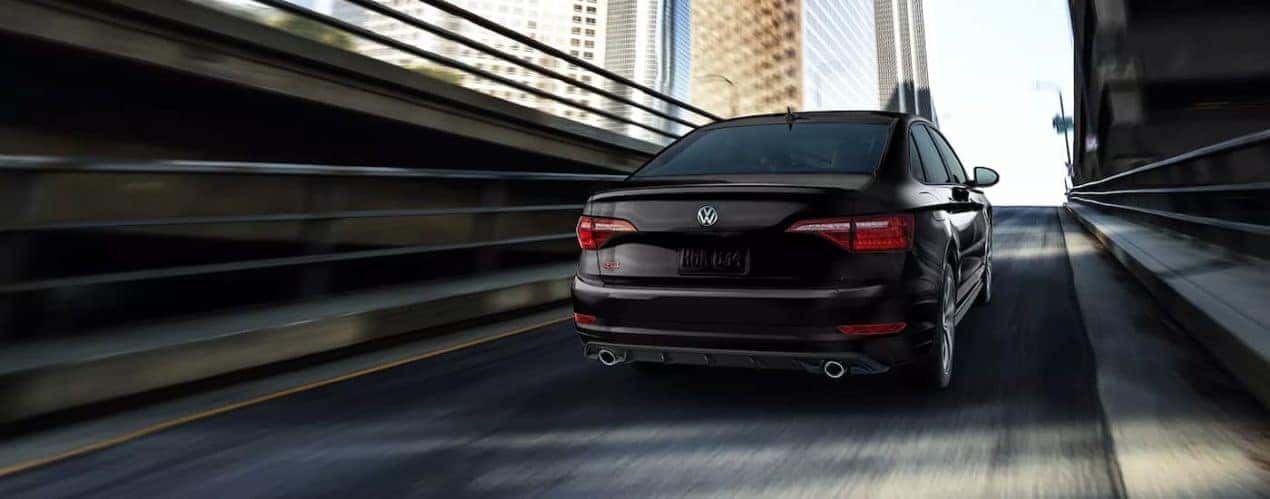
Both the 2022 Volkswagen Jetta and 2022 Hyundai Elantra sport an efficient and reasonably powerful standard engine. Volkswagen has given the Jetta a new engine for the 2022 model, a 1.5-liter EA211 turbocharged I-4. This new standard engine features a variable-geometry turbocharger and direct fuel injection to provide 158 horsepower at 5,500 RPM and 184 lb-ft of torque at 1,750 RPM. As you can see, that is a serious amount of torque delivered at a very low engine speed. This is due to the use of the turbocharger, which forces additional air into the engine to produce more power.
Hyundai has gone with a larger standard engine on the 2022 Elantra than Volkswagen uses in the Jetta, but one that does not include a turbocharger. This is a 2.0-liter MPI Atkinson DOHC 16-valve inline 4-cylinder gas engine. Further, unlike the engine on the Volkswagen Jetta, this Hyundai engine utilizes port fuel injection. As a result, its output is not as high as the smaller 4-cylinder gas engine on the Jetta. The standard engine in the 2022 Elantra tops out at 147 horsepower at 6,200 RPM and 132 ft-lb of torque at 4,500 RPM.
The 2022 Volkswagen Jetta offers drivers a choice of transmissions, while the 2022 Hyundai Elantra comes with a single transmission option for its standard engine. The base model Jetta comes with a 6-speed manual transmission, while an 8-speed automatic transmission with Tiptronic shifting is available as an option. In contrast, the Elantra features a Smartstream Intelligent Variable Transmission, Hyundai's brand name for a Continuously Variable Transmission (CVT). While this can be more efficient than a manual or automatic transmission, what it gains in fuel economy, it sacrifices in overall performance and acceleration.
Neither the 2022 Jetta nor the 2022 Elantra is going to hurt you at the gas pump. On the contrary, these are two of the more fuel-efficient models in their segment. The base model Elantra SE has a slight edge in fuel economy due to its weaker engine and CVT, able to deliver 33 miles per gallon in the city, 43 miles per gallon on the highway, and a combined 37 miles per gallon. But, if you choose the mid-level Elantra SEL or the top-trim Limited, fuel economy drops to 31 miles per gallon in city driving, 41 miles per gallon on the highway, and 35 miles per gallon combined.
The Jetta with the 6-speed manual transmission actually matches the Elantra SE on the highway with an EPA-estimated 29 miles per gallon in the city and a combined rating of 34 miles per gallon.[b] If you choose a Jetta with the available 8-speed automatic transmission, you can also expect solid EPA-estimated fuel economy of 31 miles per gallon in the city, 41 miles per gallon on the highway, and 35 miles per gallon combined––the same numbers as on the Elantra SEL and Limited.[c]
The new engine on the 2022 Jetta gives it the edge over the 2022 Elantra when it comes to acceleration. The Jetta is going to give you better pickup off the light or when merging onto a busy freeway. The 2022 Jetta will get you from 0 to 60 miles per hour in just 7.6 seconds, while the 2022 Elantra will take 8.1 seconds to get up to that speed.
Both the Volkswagen Jetta and Hyundai Elantra are front-wheel drive cars, providing similar rides. However, the Jetta gives you slightly more ground clearance and is easier to handle. This is due to the tighter 105.7-inch wheelbase on the Jetta compared to the longer 107.1-inch wheelbase on the Elantra.
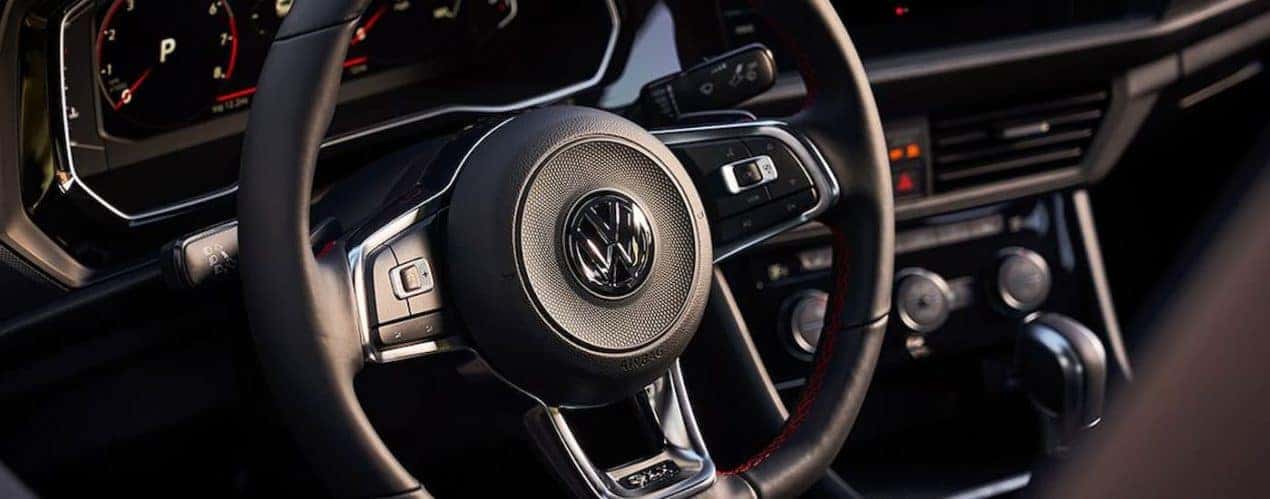
Volkswagen and Hyundai have taken steps to keep their respective compact sedans up-to-date when it comes to technology. As a result, the 2022 Volkswagen Jetta and 2022 Hyundai Elantra feature some of the latest safety and infotainment technology offered by these two automakers. However, when it comes to overall features, the Jetta has the edge over the Elantra.
Both automakers have made a large number of safety technologies standard on all trims of the 2022 Volkswagen Jetta and 2022 Hyundai Elantra. The base model Jetta offers Volkswagen IQ.DRIVE active driver-assistance features, and the Elantra has comparable technology. Features include forward collision warning and avoidance, which will alert you of an imminent crash with another vehicle or pedestrian in your path. Both systems will also use emergency braking to bring the car to a stop to avoid the collision or mitigate damages. Both cars also have a blind spot monitor that will make it safer and easier to change lanes on a busy highway. Finally, both models feature rear cross-traffic alert, which will work with the standard rearview camera to help backing out of a parking spot by warning you if a car or pedestrian is about to pass behind your vehicle.
Each car also offers a number of different standard safety features from the other model. The 2022 Jetta has standard automatic post-collision braking and an intelligent crash response system. The first will engage the brakes upon a collision to prevent a secondary crash. The latter will shut off the gas pump and engine after a crash to prevent a fire. It will also turn on the hazard lights and unlock the doors to assist rescuers in aiding the passengers. Hyundai does not offer either system on any model of the 2022 Elantra.
The 2022 Elantra does offer standard lane keep assist to keep your vehicle centered in its lane, driver attention warning to keep you alert, and high beam assist to automatically control the high beams at night. Similar features are available as part of the IQ.DRIVE system on the 2022 Jetta. Volkswagen also adds adaptive cruise control and Travel Assist, a form of limited semi-autonomous driving where the system assists you with steering. The respective systems on the Hyundai are only standard on the top-trim Limited model, with Smart Cruise Control available as an extra on the mid-tier Elantra SEL. While you can get these additional features on any trim of the Jetta, you are truly limited on the Elantra.
The 2022 Hyundai Elantra features the Gen 2.0 Display Audio system with an 8-inch touchscreen on the Elantra SE and SEL models, which grows to a 10.25-inch screen with navigation on the top Elantra Limited model. In contrast, the 2022 Volkswagen Jetta features the MIB system with a 6.5-inch screen on all models except the top Jetta SEL, which has the MIB3 system with an 8-inch screen. However, while both feature Apple CarPlay, Android Auto, and Bluetooth technology, the Volkswagen MIB system is easier to use than the system on the Hyundai. This is because Volkswagen uses a capacitive-touch sensor on the MIB system, like those featured on smartphones and tablet computers. This allows for the use of swiping and pinch-zooming, giving you exceptional connectivity in a much more user-friendly system.
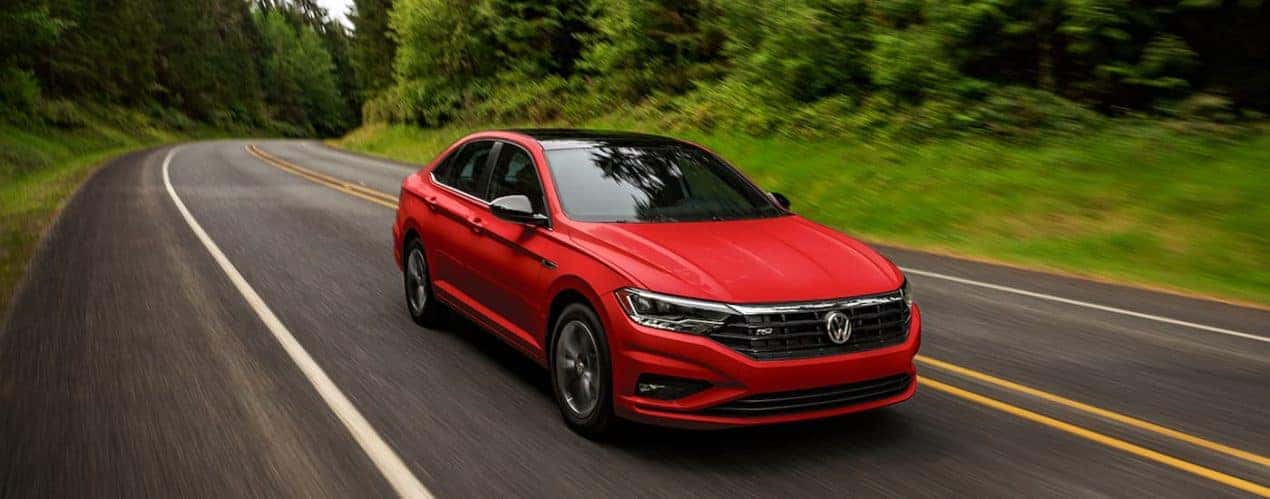
The 2022 Hyundai Elantra is a slightly larger car than the 2022 Volkswagen Jetta. The Elantra's wheelbase measures 107.1-inches, almost two inches longer than the Jetta. However, both models feature practically the same amount of cargo space in the truck. The 2022 Elantra offers 14.2 cubic feet of space, just slightly bigger than the 14.1 cubic feet afforded in the 2022 Jetta. This is a testament to the space maximization of the Volkswagen designers, giving you a more maneuverable car with just as much trunk space as the larger Elantra.
If you look at raw numbers, you would think that the 2022 Hyundai Elantra is more spacious than the 2022 Volkswagen Jetta. You would also be mistaken. Sure, the Elantra offers 99.4 cubic feet of passenger volume, fully 3.7 more cubic feet than the 94.7 cubic feet afforded by the Jetta. Nevertheless, the numbers don't tell the whole story with these two compact sedans.
When it comes to passenger space, a great deal has to do with how the vehicle designers apportion space. Some put more space in the front row while giving short shrift to the passengers in the back seat. This might be fine if you plan to drive alone most of the time. But what happens when you want to take advantage of all five seats in your car? In addition, those volume figures don't take into account that some cars afford more headroom than others. Both of these are the case when comparing the Jetta and Elantra when it comes to the passenger space in the car's interior.
First, the Jetta provides a roomier backseat than the Elantra while providing enough room in the front for you and whoever is riding shotgun to stretch out on long drives. The Jetta and Elantra provide practically the same amount of headroom in the back seat and almost the same amount of legroom. However, the Jetta provides 51.4 inches of hip room in the rear seat, while the Elantra provides only 50.5 inches. Things might get a little cramped back there in the Elantra if you plan to drive with a full complement of five passengers.
Second, a great deal of the passenger space on the Elantra is taken up by headroom. The front row of the Elantra affords 40.6 inches of headroom compared to 38.5 inches on the Jetta. This can turn into a great deal of wasted space. It also accounts for the misleading figures when you just look at gross interior passenger space on these two compact sedans. In reality, the Jetta is just as roomy as the Elantra, with a tighter wheelbase to provide better handling.

If you call the great Seattle and Tacoma area home and want a great car, then you should stop by Bud Clary Auburn Volkswagen. We are among the top dealerships in this part of Washington State and offer a full lineup of new and used models of these great vehicles. Come in today and let our friendly sales staff show you everything you need to know about Volkswagen. They will be happy to answer all of your questions and take you on plenty of test drives so you can see for yourself why Volkswagen models seem to be made for folks like us who call this part of the country home.
If you need to finance your next purchase, our team will be happy to show you all the lease and loan options available to you, so you can find one on competitive terms that suits your personal budget. When it comes time to service your car, bring it here so our team of trained technicians can get it back on the road in no time. We can help you with everything from routine maintenance to major repairs. At Bud Clary Auburn Volkswagen, we are your full-service Volkswagen dealer. Come in today and see why you should make the 2022 Volkswagen Jetta your next sedan!
*Images, fuel economy, and other stats, may reflect higher trim levels, options, or features that may result in a higher cost from the starting MSRP.
MSRP excludes tax, license, registration, additional options, and possible destination charges. Dealers set own prices.

